- Description
- Reviews
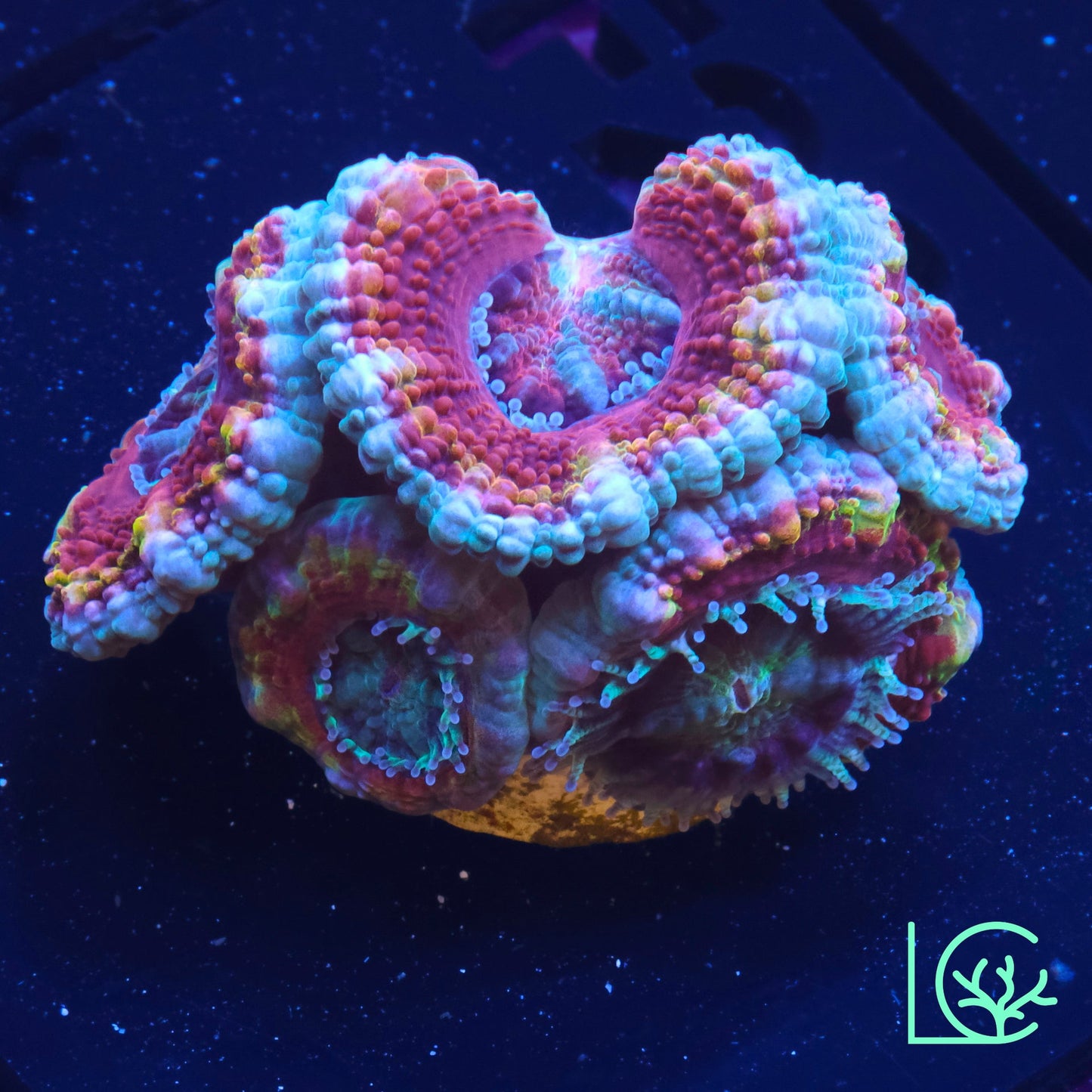
Lush Corals presents the LC Rainbow Acan
This WYSIWYG frag is in excellent health and has been fully aquacultured in our systems for years to ensure our customers receive healthy and pest free coral.
This 5 polyp frag is photographed on a 3/4" frag plug for sizing.
ABOUT ACAN CORAL
Acan corals, also known as Acanthastrea, are vibrant, colorful LPS corals with large, fleshy polyps and intricate, maze-like skeletons. They come in a variety of hues, including reds, greens, and blues, making them a stunning addition to any reef tank. Acan corals are relatively easy to care for, thriving in moderate light and flow, and are known for their ability to grow quickly under ideal conditions.
Lighting Requirements for Acan Coral
Acan corals prefer moderate lighting and can tolerate a range of light intensities. However, they tend to thrive in lower to moderate light conditions.
-
Ideal PAR Range:
50–150 PAR -
50–100 PAR: Best for Acan corals, providing gentle light that enhances color without risking bleaching.
-
100–150 PAR: Tolerable for brighter areas, but be sure to acclimate them gradually to avoid stress.
-
Spectrum:
-
A blue-dominant spectrum (420–470nm) helps highlight their vibrant colors.
-
Full-spectrum light also supports healthy growth, as long as the intensity is kept moderate.
-
Lighting Type:
-
Acan corals do well under LEDs, T5HO, or metal halide lighting when PAR is controlled within the ideal range.
-
Placement Tips:
-
Place them in lower to mid sections of the tank, where light intensity is more subdued.
Water Flow Requirements for Acan Coral
Acan corals prefer gentle to moderate, indirect water flow. They do well with steady water movement but can become stressed by strong or direct currents.
-
Flow Type:
-
Gentle to moderate, indirect flow is ideal.
-
A gentle current will help promote healthy polyp extension and prevent debris buildup, while too much flow may cause the coral to retract its polyps.
-
Why It Matters:
Proper flow aids in nutrient and waste removal, while too strong of a current can damage the coral’s delicate tissues. -
Placement Tips:
Position them in areas of the tank where they receive gentle, diffused flow, such as on the sandbed or lower rockwork.
No additional information available.